
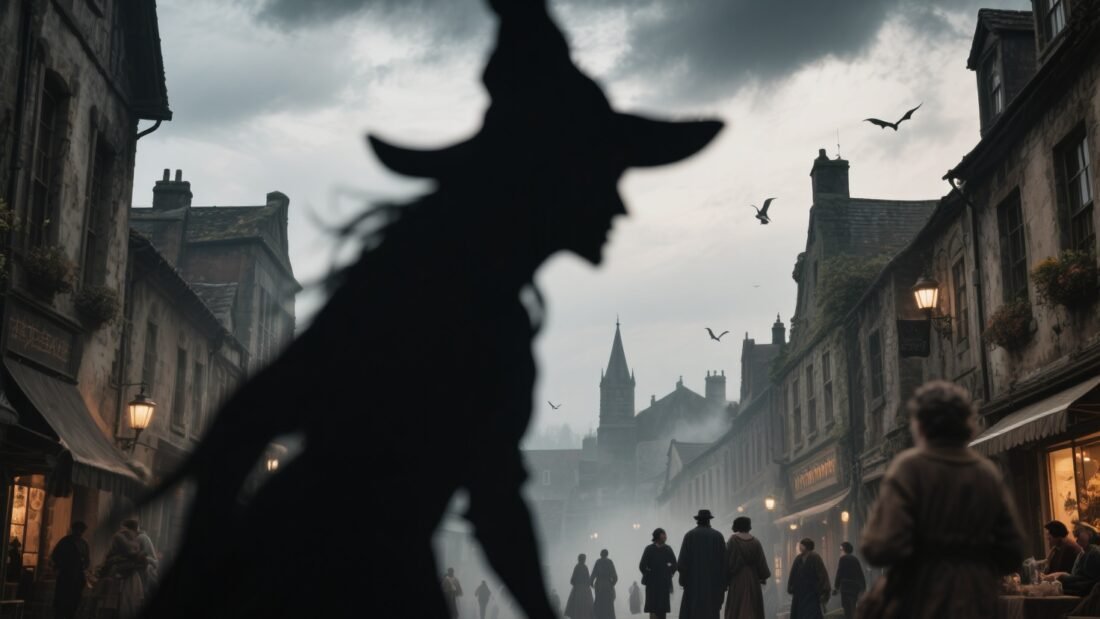
The Salem Witch Trials are often reduced to a single phrase: mass hysteria. A group of frightened teenage girls. A community gripped by irrational fear. A tragic but simple explanation.
But history is rarely that simple.
In 1692, in Puritan New England, a four-year-old girl named Dorothy Good was arrested for witchcraft, chained in a dungeon, and interrogated by adults. Her story alone is enough to shatter the comforting myth that Salem was just a moment of collective madness. What truly happened was far darker—and far more deliberate.
Fear Was Only the Beginning
Colonial Massachusetts was a society under immense strain. Religious extremism framed the world as a battlefield between God and Satan. Recent wars had traumatized entire communities. Refugees flooded into Salem carrying stories of slaughter and destruction. Disease, famine, and uncertainty were constant companions.
But fear alone does not explain why accusations followed clear social and political fault lines.
Salem itself was divided—between the wealthier, merchant-driven Salem Town and the poorer, agrarian Salem Village. Two families embodied this split: the conservative Putnams, desperate to maintain control, and the more commercially connected Porters, who opposed them. Long-standing feuds over land, power, and influence were already simmering.
The witch trials didn’t create these conflicts. They weaponized them.
Choosing the Perfect Targets
The first accused were not random.
- Tituba, an enslaved woman with no protection or status
- Sarah Good, a homeless, pregnant beggar
- Sarah Osborne, a widow entangled in property disputes with powerful families
They were vulnerable, inconvenient, and easy to sacrifice.
Tituba’s coerced confession—likely beaten out of her—gave authorities exactly what they needed: confirmation of a satanic conspiracy. From that moment on, the trials escalated with terrifying speed.
When Innocence Became a Crime
Once the machinery was in motion, no one was safe.
Bridget Bishop was executed for defying Puritan norms—outspoken, independent, and unwilling to conform.
Martha Corey, a respected church member, was accused not despite her piety—but because she questioned the trials.
Giles Corey, her husband, was crushed to death under stones after refusing to plead, choosing torture over surrendering his land to the state.
And then there were the children.
Four-year-old Dorothy Good spent months in chains. She watched her mother hang. She never truly recovered.
At the center of the accusations stood Ann Putnam Jr., a child whose testimony helped condemn dozens—many of them enemies of her family. Years later, she would issue a rare and haunting apology, admitting the accused were innocent, though still cloaking her actions in religious delusion.
The End—and the Cover-Up
The trials only stopped when accusations crept too close to the powerful—when even the governor’s wife was no longer safe. Spectral evidence was banned. Prisoners were pardoned. The court quietly dissolved.
But accountability never truly followed.
Judges did not apologize. Reparations were delayed for decades. Some victims weren’t officially exonerated until 2022—over 330 years later.
The convenient explanation of “mass hysteria” remained. It absolved everyone.
The Real Dark Secret of Salem
The truth is uncomfortable: Salem was not a tragedy of madness, but of human choice.
The trials were fueled by:
- Power struggles and land disputes
- Religious extremism
- Unaddressed war trauma
- Greed, resentment, and revenge
No witches were required. Fear was merely the spark.
The real monsters were ordinary people who convinced themselves they were righteous.
🎥 In our latest Global Whys video, we uncover the forgotten victims, hidden agendas, and calculated cruelty behind America’s most infamous witch hunt.
Watch the full investigation and decide for yourself: was Salem hysteria—or was it something far more disturbing?
Salem's Hidden Horror: What They Did to Dorothy Good
CHAPTERS:
00:00 – The Innocent Accused
01:18 – The Spark in the Powder Keg
05:08 – The First Accused: A Perfect Storm of Outcasts
10:00 – The Unraveling of a Community: The Accusations Spread
14:39 – The Children of Salem: Victims and Perpetrators
18:32 – The Lingering Shadows
22:35 – Conclusion
🔗 Facebook: https://www.facebook.com/GlobalWhys
🔗 Blog: https://globalwhys.com
#GlobalWhys #history #salemwitchtrialsShow More




Leave a Reply