
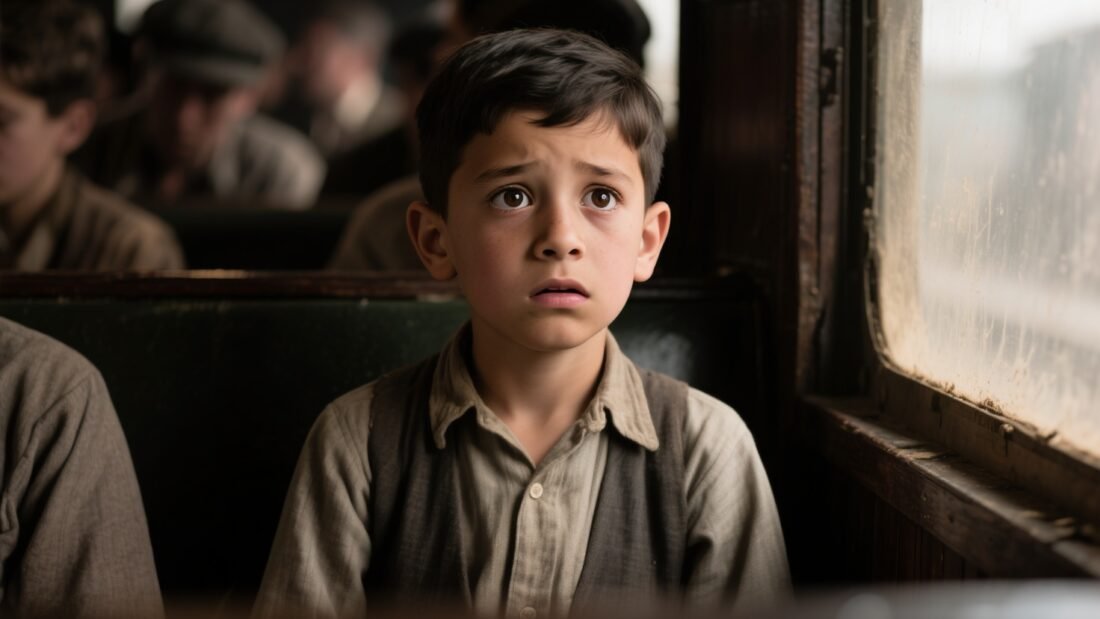
In the early 1930s, while the world was collapsing under the weight of the Great Depression, America carried out one of the most sweeping and least discussed human rights violations in its own history. It happened quietly. No declarations, no congressional hearings, no national headlines.
Between 1929 and 1936, as many as two million people of Mexican ancestry — men, women, and children — were forced out of the United States and sent to Mexico. But here’s the truth most history books skip over: more than half of them were U.S. citizens.
A Nation in Panic
The stock market crash of 1929 did more than wreck the economy; it fractured the national psyche. Millions of Americans were unemployed, desperate, and searching for someone to blame.
Politicians and newspapers began pointing fingers — not at Wall Street, not at corporate corruption, but at immigrants.
Mexican Americans, many of whom had been born in the U.S. and were contributing members of their communities, suddenly became scapegoats. The rhetoric was simple and cruel: “If they leave, there will be more jobs for real Americans.”
County officials, city mayors, and even federal agencies quietly collaborated on what they called “repatriation drives.” It sounded voluntary — but it was anything but.
The “Voluntary” Deportations
The U.S. government didn’t need fences or detention centers back then. They used fear. Agents from local relief offices would visit homes, factories, and schools — threatening to cut off public aid unless entire families “returned” to Mexico.
Most of those families had never even lived there. Many didn’t speak Spanish. Some were second- or third-generation citizens whose birth certificates were ignored or destroyed.
They were herded onto trains and buses bound for the border — children clutching dolls, mothers crying silently, fathers too afraid to protest. And when reporters occasionally asked why, officials insisted it was voluntary repatriation.
The La Placita Raids
Los Angeles was one of the epicenters of this silent purge. On a Sunday afternoon in 1931, hundreds of families were enjoying the sunshine at La Placita Park, near Olvera Street.
Without warning, immigration officers surrounded the square. They blocked every exit and began demanding identification papers. In less than an hour, over 400 people were detained.
Many were later deported — even those born in California.
It was one of the largest single immigration raids in U.S. history — and yet, you won’t find it in most textbooks.
Forgotten Names, Lost Generations
One of the most haunting details about the Mexican Repatriation is how completely it vanished from public memory. There were no reparations, no official apologies, no recognition for decades.
Families were split across two countries. Children born in the U.S. grew up in rural Mexico, disconnected from their language, culture, and legal rights. Entire communities — especially in California, Texas, and Michigan — were gutted almost overnight.
By the late 1930s, when the labor market began recovering, the same government that expelled them started recruiting Mexican workers again through the Bracero Program. History had come full circle — but still, no one spoke of what happened before.
Why Nobody Remembers
Part of the reason this story disappeared is because it didn’t fit the national narrative. America in the 1940s wanted to see itself as the global defender of freedom — not the perpetrator of ethnic cleansing.
The mass deportations weren’t widely photographed or recorded. Many local archives destroyed documents, and newspapers moved on. For decades, the victims’ descendants were too afraid or ashamed to speak up.
It wasn’t until the 1980s that historians began uncovering records of the raids, passenger manifests, and government correspondence. In 2005, California formally apologized for its role — but no federal acknowledgment has ever followed.
History Repeats Itself When We Forget
The story of the Mexican Repatriation isn’t just about the past — it’s about what fear can do to a nation. It’s about how quickly “us” and “them” can blur when times get hard.
Citizenship didn’t protect those families in the 1930s. Paperwork didn’t save them. Silence made sure it wouldn’t be remembered.
Today, we face new conversations about immigration, identity, and belonging. And while the details have changed, the emotions are eerily familiar — suspicion, division, and the temptation to forget uncomfortable truths.
A Question That Still Echoes
There’s a story of a young boy from Los Angeles — just seven years old — who was deported with his parents in 1931. As the train pulled away from the station, he turned to his mother and asked,
“Where is Mexico?”
He had no idea he was leaving the only home he’d ever known.
That single question captures the heart of this tragedy — and why remembering it matters.
Watch the Full Story
Our latest Global Whys documentary, “They Deported 1 Million U.S. Citizens And Nobody Remembers,” dives into this forgotten history — exploring the social, political, and human cost of fear during the Great Depression.
🎥 Watch it here, because sometimes, the most haunting stories are the ones that were never told.
They Deported 1 Million US Citizens And Nobody Remembers
This video tells the story of a young boy from California and his family, exploring the human cost of mass deportation, historical trauma, and erased histories. Learn how these events shaped generations, and why remembering them matters for human rights, citizenship, and justice today.
CHAPTERS:
00:00 Where is Mexico?
01:38 The Set-Up
04:25 The First Raids
07:20 Maria and Antonio
10:40 Citizenship Means Nothing
13:34 The Math Of Erasure
16:18 Life On The Other Side
19:17 Trying To Come Home
21:33 The Silence
23:42 California Says Sorry
26:17 Why It Matters Now
27:56 Voices We Still Can Hear
30:40 The Numbers Today
32:34 Teaching The Next Generation
34:24 What Official Acknowledgment Could Look Like
36:19 The Cost Of Silence
38:40 Conclusion
OTHER LINKS:
🔗 Facebook: https://www.facebook.com/GlobalWhys
🔗 Blog: https://globalwhys.comShow More
This is more than history — it’s a warning. Because when we forget the past, we leave the door open for it to repeat itself.
After watching, share your thoughts in the comments:
👉 What does “home” mean to you?




Leave a Reply