
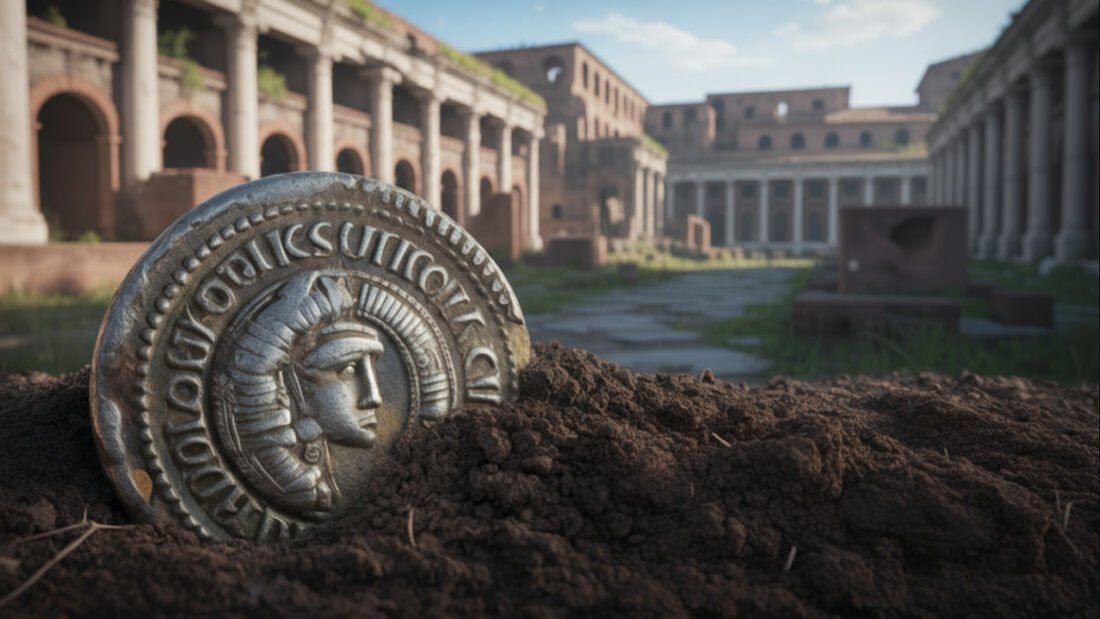
Beyond the barbarians at the gates lies a far more haunting truth: Rome was undone by the same invisible forces that threaten civilizations today.
The Slow Death of an Empire
The fall of Rome wasn’t a dramatic collapse in a single night—it was a slow, centuries-long unraveling. Textbooks often reduce it to simple explanations: barbarian invasions, weak emperors, or political chaos. But behind those familiar headlines lurked a quieter, more devastating story—one of exhausted resources, poisoned environments, and an empire slowly eating itself from the inside out.
Rome was a machine of consumption. Its appetite for wood, metal, food, and wealth seemed limitless. Yet every machine runs on fuel, and Rome’s came from forests, fields, and mines that could not keep up. The true decline of the empire began not with swords, but with axes, plows, and furnaces.
A Civilization at Its Peak
At its height, Rome appeared unstoppable. Its cities were marvels of architecture and engineering. Aqueducts carried fresh water for miles. The Colosseum dazzled crowds of 60,000. Its currency was trusted across continents. For two centuries, peace and prosperity reigned.
But that success came with a dangerous illusion: the belief that nature’s bounty was infinite. Forests were stripped bare, soils eroded, and once-fertile lands turned to dust. The empire’s heartlands—Italy, Spain, and North Africa—were gradually exhausted. What looked like strength was really a fragile balance waiting to collapse.
The Hidden Enemies Within
As Rome’s industries devoured wood and metal, pollution spread through air and water. Lead from pipes, cookware, and mining poisoned not only the elite but the empire’s environment itself. Modern ice-core samples even show Roman pollution reaching the Arctic—proof of how vast its industrial footprint was.
Meanwhile, the deforestation that fueled empire also brought new diseases. Marshes like the Pontine swamps became breeding grounds for malaria, weakening the population long before the empire’s final battles.
The Economic Spiral
When expansion slowed, Rome’s wealth stopped flowing. But its expenses—armies, monuments, and subsidies—didn’t. Emperors tried to cheat the system by debasing the currency, diluting silver coins with cheaper metals. It triggered runaway inflation, shattered trust, and broke the imperial economy. Trade collapsed, farmers abandoned their land, and the empire that once connected continents fractured into isolated regions. The great Roman system had become too heavy to sustain itself.
Nature’s Final Blow
Even as the empire weakened itself, nature struck back. Volcanic eruptions in the 6th century darkened the skies, cooling the planet and destroying crops. The ensuing famines and plagues finished what centuries of mismanagement had started. Rome’s decline was complete—not with a bang, but with a long, weary sigh.
The Real Lesson of Rome
Rome didn’t just fall—it wore itself out. The empire’s true enemy was the belief that progress could go on forever, that nature would never fight back. Environmental strain, economic instability, and social division are not just ancient problems—they’re timeless ones.
In the ruins of Rome lies a warning for us all: no civilization, no matter how advanced, can survive if it consumes the foundations that sustain it. The empire’s fate is a mirror, reflecting the cost of ignoring balance, resilience, and sustainability.
🎥 Watch the full video:
The Real Reason Rome Fell (Hint: It Wasn't the Barbarians)
CHAPTERS:
00:00 – The Setup
01:12 – The Illusion of Eternal Rome
03:45 – The Silent Cost of Industry
06:36 – The Dying Land
09:18 – A Poisoned Chalice
11:28 – When the Heavens Turned
13:18 – The Economic Deаth Spiral
15:09 – The Unraveling
17:03 – Conclusion
OTHER LINKS:
🔗 Facebook: https://www.facebook.com/GlobalWhys
🔗 Blog: https://globalwhys.com
#GlobalWhys #history #romanempireShow More



Leave a Reply